LOM (Maya Bennardo & Leah Asher) · Juan Moreda
eine Koproduktion mit Wien Modern
Samstag, 28. November 2026 · 16:00 Uhr
Ticketpreise: 22 € (ermäßigt <30: 50 %, Ö1) | 5 € mit Festivalpass
Ticketvorverkauf: https://www.wienmodern.at/2026-kartenverkauf
Restkarten an der Abendkassa | Einlass eine Stunde vor Konzertbeginn
Jahreskarteninhaber:innen des echoraum erhalten freien Eintritt.
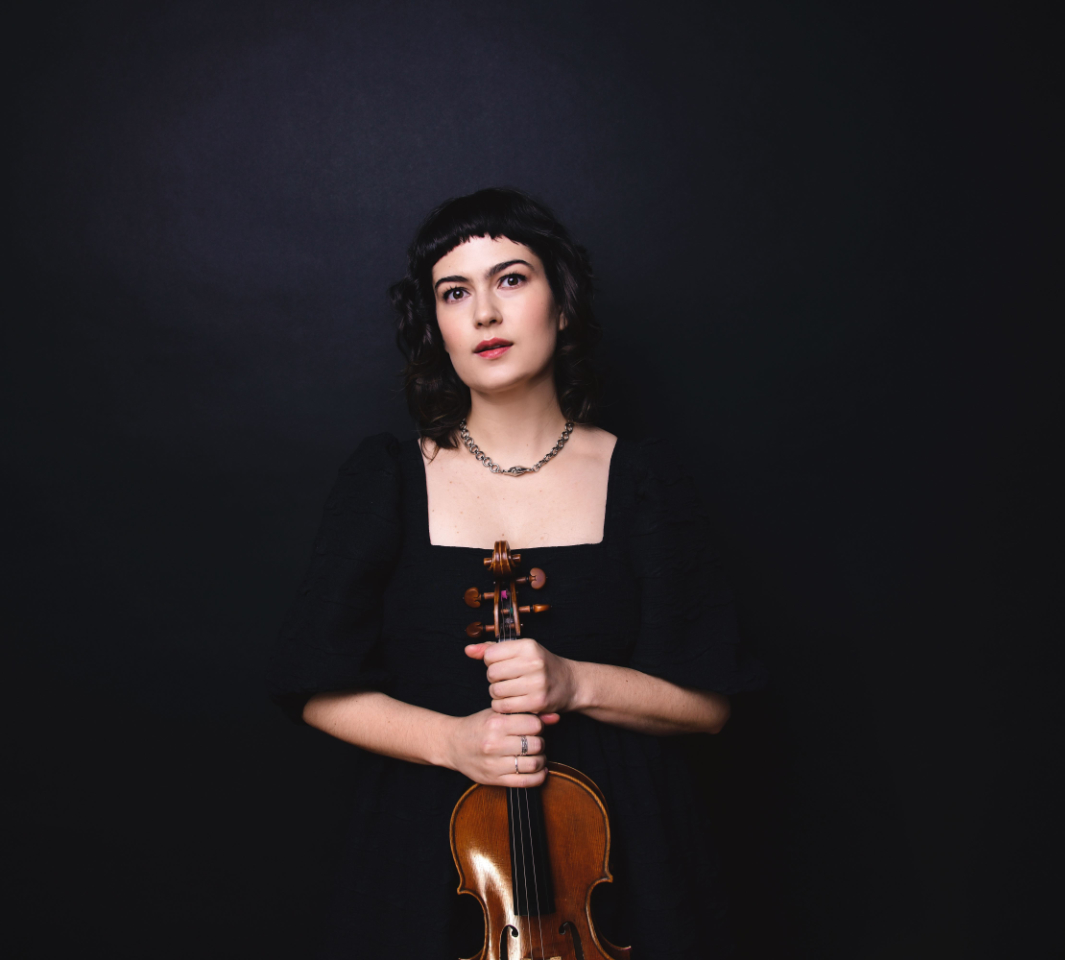
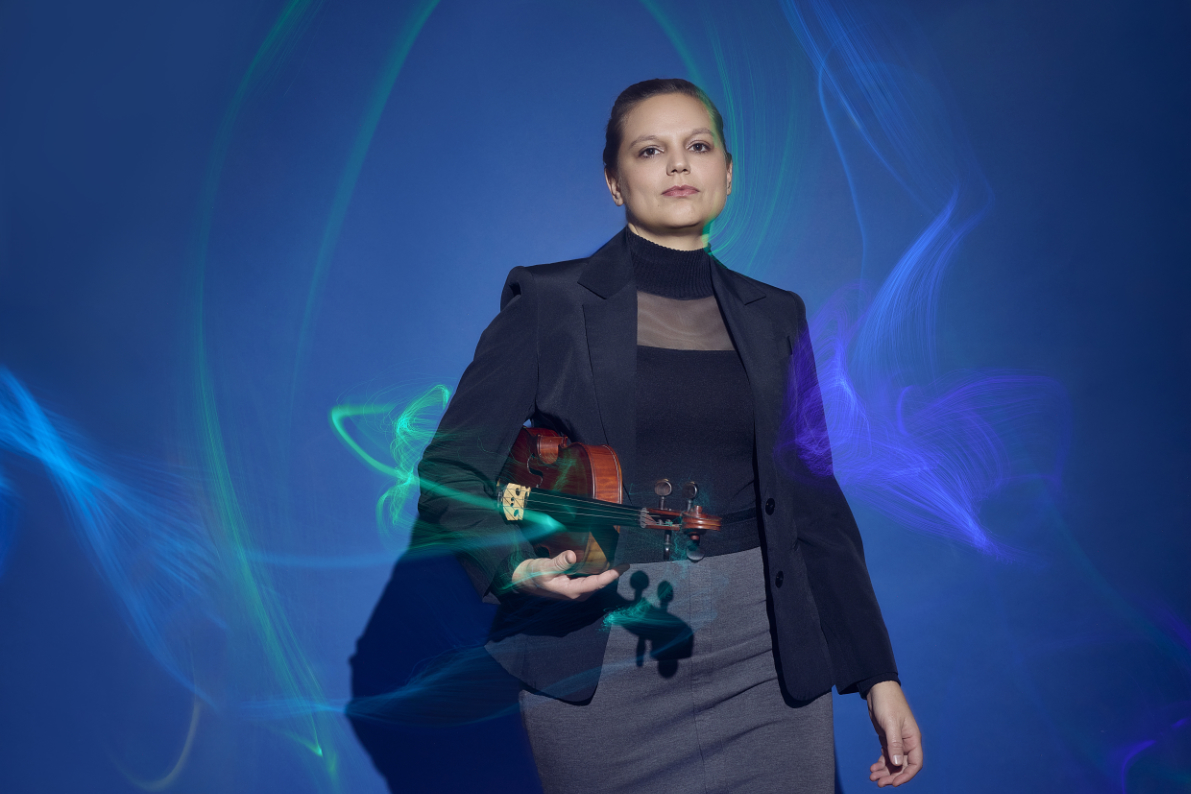
LOM
Leah Asher – Violine
Maya Bennardo – Violine
Programm
drifting/ambling
Hay Que Caminar’ Soñando – 1 (1989) – Luigi Nono
dormant gardens iii. (2026) – Maya Bennardo *Austrian Premiere
Hay Que Caminar’ Soñando – 2 (1989) – Luigi Nono
edges (2026) – Leah Asher *Austrian Premiere
Hay Que Caminar’ Soñando – 3 (1989) – Luigi Nono
drifting/ambling, a program conceived and performed by LOM (violin duo of Leah Asher and Maya Bennardo), explores the sonic and timbral extremes of the duo while taking the audience on a journey of winding paths. Weaved throughout the program is Luigi Nono’s three-movement work ‘Hay Que Caminar’ Soñando‘, whose title references a quote by Antonio Machado, „Caminante, no hay caminos, hay que caminar“ (Traveller, there are no ways, but we must go). Nono’s work pushes at the edges of the aural and physical extremes of the violins by taking the music to both the maximum of the instrumentation and to such low intensities that one at times doubts whether sound is truly heard or imagined.
As Michael Pisaro-Liu writes of this work in a program note,
„…the physical limit of the instrument is approached in a way that suggests that the music would continue, beyond the realm of the physical and audible. With the emphasis on boundaries, we are strongly directed towards a metaphorical kind of space, enclosed not with walls but with windows, which allow us a view to the horizon. And still, this music is a song. But this song either speaks with gestures of great intensity or hardly at all. There is just the slightest echo of melody: Verdi‘s ‚scala enigmatica‘, itself an echo of melody. In this piece we hear song as pure longing, reaching for something that will forever remain just out of our grasp.“
The threshold between imagination and perception is continued in Leah Asher’s ‚edges‘. Here, the intricate interweaving textures explore the liminal space on the precipice between dreams and reality. Asher’s interest in investigating acoustic phenomena and the extreme sonic possibilities of the violin stems from her extensive solo improvisation practice on which the sound worlds of ‚edges‘ are built. The two violins map a series of distinct sonic terrains that slowly unveil themselves, while rife with spontaneous dialogue. As on the verge of sleep, there is a feeling of searching, slowly transforming, almost connecting, yet always somewhere just out of reach.
Maya Bennardo’s ‚dormant gardens iii.‘ is the most recent in a series of works (i. for andPlay–violin and viola, 1a. for solo violin, and ii. for Bennardo-Larson Duo–violin and piano) inspired by daily Nordic winter walks in her northern Stockholm neighborhood. These works are all written by Bennardo to be performed either solo or together with close collaborators. These are collaborators she trusts explicitly with her music, and with whom she would want to share a long, close-listening walk through a dormant, mutedly vibrant Swedish countryside. In these works, slowly unfolding and ever-evolving timbral movements invite the listeners on a circuitous musical path that ultimately leads them right back home:
„fallen foliage
returning to air and soil
glistening in the light
while, perhaps
the whisper of breeze
plays the unburdened branches–
dormant garden
holding its breath for
summer’s rustling“
-Maya Bennardo
Maya Bennardo (she/her) is an active performer and composer living in Stockholm, Sweden. Maya is interested in opening the dialogue and blurring the boundaries between composers and performers, and is devoted to performing music of the present. She is a founding member of the violin/viola duo andPlay, described by I Care If You Listen as “enthusiastic champions for new music and collaboration.” She performs new and traditional repertoire with pianist Karl Larson in their Bennardo-Larson Duo, and was formerly a member of the internationally renowned Mivos Quartet. Maya is a sought-after chamber musician and soloist, and recent highlights include performances at Prague Quiet Music Festival (CZ), Huddersfield Contemporary Music Festival (UK), Sound of Stockholm (SE), and at the Library of Congress on the “Betts” Stradivarius violin (USA). She has had releases on Deutsche Grammophon, Kairos, Another Timbre, kuyin, elsewhere, Nonesuch Records, among others. Maya released her first solo record, ‘four strings’ with music by Eva-Maria Houben and Kristofer Svensson on the kuyin label, September 2022 (named as one of The Best of Contemporary Classical 2022 on Bandcamp). The album is a continuation of Bennardo’s work exploring sonic fragility and temporal stasis. Maya’s compositions are characterized by slow, unfolding timbral movements–exploring the co-existence of pitch and noise. Her compositions have grown naturally out of her improvisational practice on the violin, and the two continue to inform each other. www.mayabennardo.com
Violinist/violist, composer, and visual artist Leah Asher is an avid performer of contemporary music and creator of new artistic works. Leah is the executive director and violinist of The Rhythm Method string quartet, co-creator of the performance art duo MEANINGLESS WORK, and co-founder of the violin duo LOM. Leah regularly performs with New York-based ensembles such as International Contemporary Ensemble, Talea Ensemble, and S.E.M. Ensemble. She formerly served as solo violist of NOSO Sinfoniettaen and co-principal viola of the Arctic Philharmonic. As a composer, Leah has been commissioned by ensembles including andPlay, Chartreuse, Periapsis, NorthArc Percussion Group, The Great Learning Orchestra, and Ensemble Hybrid. She serves on faculty at Lake George Composer’s Institute and the Composers Conference, and has conducted many residencies at universities including NYU, Columbia University, Berklee College of Music, Hunter College, and BGSU. Recent releases include Leah’s solo album ‚Retreat into Afters‘ on SCRIPTS records, The Rhythm Method’s ‚Pastorale‘ on New Focus Recordings, and The Rhythm Method’s ‘Seaglass’ on Gold Bolus Recordings. Leah joined the faculty of Manhattan School of Music in 2022. www.leahasher.com

Juan Moreda solo (Saxophone)
Programm
The Last Leaf – Chaya Czernowin (1957*)
für Sopranino-Saxofon solo
2010/2012
Dauer: ca. 12’
Misura. Obliquo – Pierluigi Billone (1960*)
für Altsaxofon solo
2021 / Revision 2023
Dauer: ca. 35’
Dieses Programm versammelt zwei Werke, die das Saxofon nicht als neutrales Klangmedium begreifen, sondern als ein Instrument, das sich im Moment der Aufführung selbst transformiert. Zwischen den Arbeiten von Chaya Czernowin und Pierluigi Billone entsteht kein stilistischer Gegensatz, sondern ein gemeinsamer Raum: eine Auseinandersetzung mit Klang als physischem, zugleich fragilen und widerständigen Phänomen.
In The Last Leaf von Chaya Czernowin nimmt das Sopranino-Saxofon eine zentrale Stellung ein – nicht nur als klangliches Mittel, sondern als ästhetische Entscheidung. Die ursprüngliche Fassung der Komposition war für Oboe gedacht, Czernowins erstes Werk für ein Soloinstrument, ein Format, in dem jeder Klang vollständig exponiert ist und die musikalische Verantwortung auf einen einzelnen Klangkörper fällt.
In der Fassung für Saxofon wählt Czernowin nicht das Sopran-Saxofon, das dem Charakter der Oboe näherliegt, sondern das Sopranino. Diese Entscheidung ist nicht ausschließlich timbral begründet, sondern zielt auf eine spezifische Form von Widerstand im Material selbst. Das Sopranino bietet keine natürliche Stabilität: sein Verhalten, seine kontrollierte Unzuverlässigkeit und die Möglichkeit unerwarteter klanglicher Nuancen sind Teil der Identität des Werks. Wie die Komponistin selbst anmerkt, wäre eine Version für Sopran-Saxofon „zu geschlossen“ gewesen, während das Sopranino die Interpret:innen zwingt, eine zusätzliche Schwierigkeit zu durchqueren – ein „Singen durch Steine“.
Diese Konstellation ist besonders bedeutsam in einem Instrument, das trotz seiner Entwicklung im 19. Jahrhundert erst spät und nur fragmentarisch in das zeitgenössische Repertoire eingegangen ist. The Last Leaf nimmt heute eine zentrale Stellung in der Literatur für Sopranino ein und trägt zur Definition seiner heutigen Klangidentität bei.
In diesem Sinn erscheint die Schwierigkeit nicht als Problem, das überwunden werden muss, sondern als konstitutiver Teil des Werks. Czernowin entwirft keine geschlossene Klangvorstellung, sondern einen Raum, in dem unterschiedliche Imaginationen des Klangs nebeneinander bestehen können. In meiner Auseinandersetzung mit dem Stück erscheinen manche Gesten als fragil, fast schwebend, während andere eine unerwartete Stabilität entwickeln, als würden verschiedene Zustände des Klangs gleichzeitig existieren, ohne sich in einer einzigen Richtung aufzulösen.
Misura. Obliquo von Pierluigi Billone verschiebt diese Perspektive von der Instabilität des Augenblicks hin zur Dauer körperlicher Anstrengung. Nicht der plötzliche Klangwechsel steht im Zentrum, sondern seine Ausdehnung im Körper des Instruments und des Interpreten. Klang erscheint hier als Ergebnis kontinuierlicher Arbeit am Rand des Möglichen, als eine Form von „Maß“, die sich nicht auf technische Parameter reduziert, sondern über Widerstand, Gewicht und Zeit definiert wird. Das Saxofon wird zu einem Feld, in dem jede Geste eine unmittelbare materielle Konsequenz besitzt.
Beide Werke teilen die Ablehnung der Vorstellung des Instruments als vollständig kontrollierbares und transparentes Medium. Stattdessen erscheint es als ein Ort, an dem Kontrolle, Ungewissheit und physische Realität permanent ineinandergreifen. Aus dieser Perspektive stellt das Programm keinen Gegensatz zweier ästhetischer Positionen dar, sondern eine gemeinsame Frage: wie Klang entsteht, wenn er nicht vollständig fixierbar oder vollständig kontrollierbar ist. In diesem Sinn versteht sich das Programm weniger als Gegenüberstellung zweier Werke, sondern als Annäherung an das Saxofon als ein Instrument im Zustand fortlaufender Transformation.
Juan Moreda ist Saxofonist und spezialisiert auf zeitgenössische Musik. Er entwickelt seine künstlerische Tätigkeit in Wien. Seine Arbeit versteht sich als kontinuierlicher Prozess der Erforschung des Saxofons, mit dem Ziel, dessen klangliche Möglichkeiten, Schreibweisen und szenische Präsenz zu erweitern. Seine künstlerische Praxis basiert wesentlich auf der Zusammenarbeit mit Komponist:innen seiner Generation. Er ist Mitbegründer des Argo Kollektivs, eines Ensembles für zeitgenössische Musik.
Zudem arbeitet er regelmäßig mit Ensembles und Orchestern wie dem ORF Radio-Symphonieorchester Wien und dem Ensemble Kontrapunkte zusammen. Sowohl als Solist als auch im Ensemble hat er zahlreiche Werke bei internationalen Festivals für zeitgenössische Musik uraufgeführt. Seine Ausbildung absolvierte er am Conservatori Superior de Música de les Illes Balears (Spanien), an der mdw (Diplomstudium Saxofon sowie Master in Neue Musik – Ensemble) und an der KUG (Postgraduate PPCM). Parallel zu seiner künstlerischen Tätigkeit unterrichtet er Saxofon an verschiedenen Musikschulen in Wien.